
2,557 Plan Listings Across Colorado: Why Choosing Health Coverage Is Harder Than It Looks
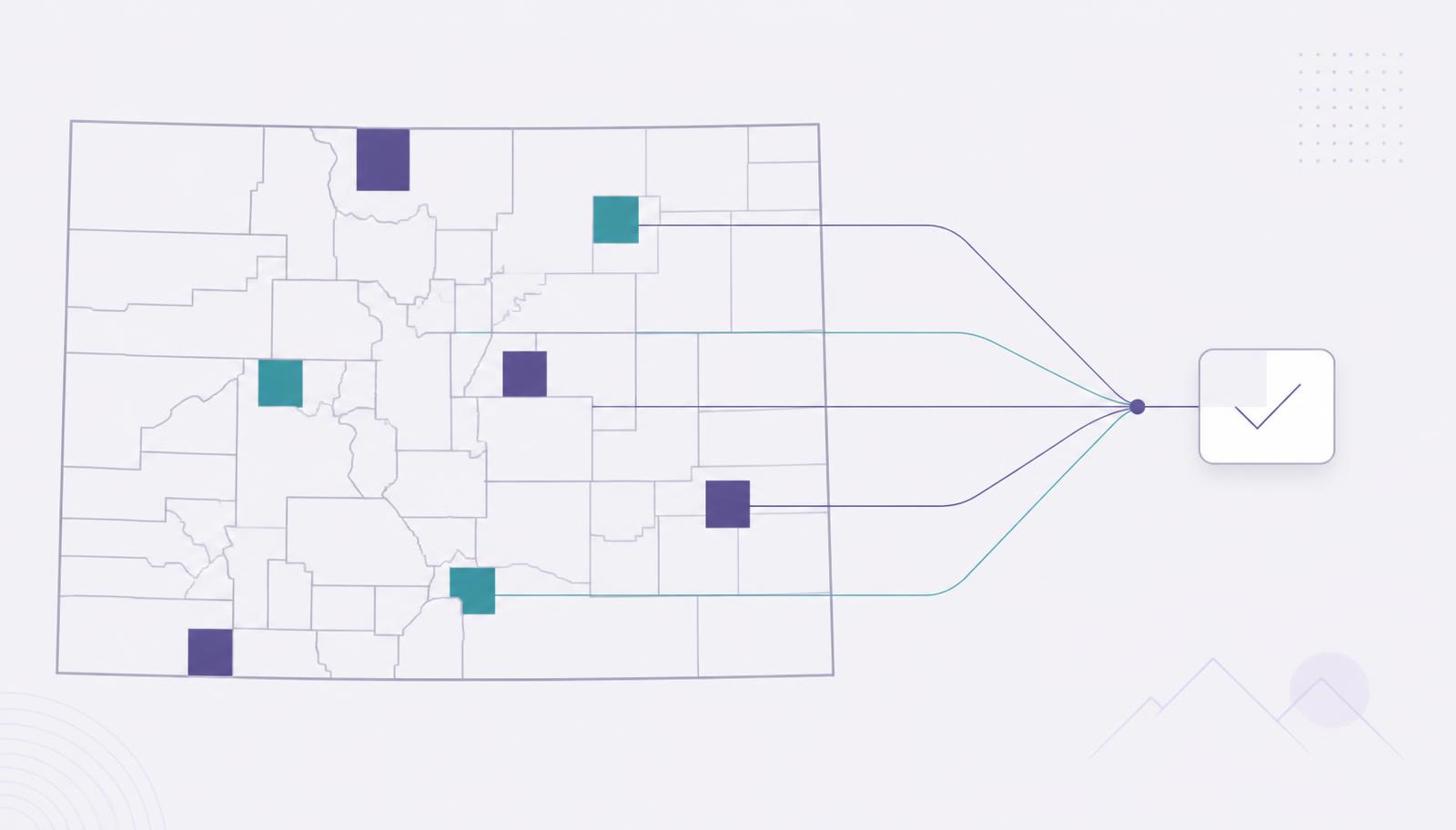
Maggy Health's Colorado ACA dataset contains 152 plan projections represented across 2,557 county-specific selectable listings covering all 64 Colorado counties. The data shows why choosing health coverage quickly becomes more complicated than simply comparing premiums.
By The Maggy Health Team
Shopping for health insurance sounds like it should be straightforward.
- Choose a plan.
- Check the premium.
- Make sure your doctors are covered.
- Understand the deductible.
- Enroll.
But once you start working with the actual data behind health insurance choices, something becomes obvious very quickly:
Choosing a health plan is not really one decision. It is dozens of decisions hidden inside one.
As part of building Maggy Health's health plan navigation capabilities, we created a governed public-reference dataset for Colorado's ACA individual market.
The result included:
- 152 plan projections
- 2,557 county-specific selectable plan listings
- All 64 Colorado counties
Those numbers help illustrate something consumers experience every year:
There may be plenty of health insurance information available.
That does not mean it is easy to make a good decision.
First, A Clarification About the Numbers
The 2,557 figure does not mean Colorado consumers have 2,557 unique insurance plans available to choose from.
Insurance availability varies geographically.
A plan may be available in several counties, while another may only be offered in a limited part of the state.
So our dataset represents the combinations of plans and the geographic markets in which they can be selected.
That distinction matters.
A person shopping for insurance does not need to understand every plan in Colorado.
They need to understand:
Which plans are actually available to me?
That is the first filtering problem.
And it happens before we even begin discussing benefits, providers, or price.
Your ZIP Code Changes the Starting Point
Health insurance is geographic.
Someone living in Denver may have a different set of ACA options than someone living in Grand Junction, Pueblo, Fort Collins, or a rural Colorado county.
That means a statewide list of health plans is not particularly useful to an individual consumer.
The experience has to begin with geography.
- Where do you live?
- Which plans serve that county?
- Which of those plans are available for the specific coverage situation being evaluated?
Only then can meaningful comparison begin.
This sounds obvious.
But it illustrates a larger problem with healthcare information:
The useful answer is often a filtered answer.
More data is not necessarily better.
Relevant data is better.
Once You Know Which Plans Are Available, The Hard Part Begins
Imagine narrowing hundreds of statewide plan possibilities down to the plans actually available where you live.
Now you have to compare them.
Most consumers naturally start with the monthly premium.
That is understandable.
It is also incomplete.
A health insurance plan is really a collection of financial rules and provider relationships.
Two plans with similar premiums can create very different experiences once you actually use healthcare.
A meaningful comparison can include:
- Monthly premium
- Deductible
- Out-of-pocket maximum
- Primary care copays
- Specialist copays
- Coinsurance
- Prescription drug benefits
- Hospital benefits
- Emergency care
- Imaging
- Laboratory services
- Mental health coverage
- Provider network
- Drug formulary
- Referral requirements
- Other benefit-specific rules
Suddenly the question is no longer:
“Which plan is cheapest?”
It becomes:
“Which plan is likely to work best for me?”
That is a much harder question.
The Cheapest Premium May Not Mean the Lowest Cost
Consider two simplified plans.
Plan A: lower monthly premium, higher deductible, higher cost-sharing when care is used.
Plan B: higher monthly premium, lower deductible, lower cost-sharing for certain services.
Which one is better?
There is no universal answer.
For a person who rarely uses healthcare, Plan A might be attractive.
For someone who sees specialists regularly, takes several prescription medications, or expects an upcoming procedure, Plan B could potentially create a very different financial outcome.
That is why health insurance cannot be evaluated solely as a monthly subscription.
The value of the plan depends partly on how you are likely to use healthcare.
Then There Is the Provider Network
A plan can look excellent on paper and still be a poor choice for a particular person.
Why?
Because their physicians or preferred health system may not participate.
A consumer may want to know:
- Is my primary care doctor in the network?
- Is my cardiologist included?
- What about the hospital system I normally use?
- If I need a new specialist, how broad is the network?
These questions can sometimes matter more than relatively small differences in premiums or deductibles.
And checking them is not always simple.
Provider participation can vary by specific insurance product.
Seeing an insurer's name on a physician's website does not necessarily prove that every product offered by that insurer participates.
The plan matters.
Prescription Drugs Add Another Layer
Then there is pharmacy coverage.
Someone taking regular medications may need to understand:
- Is the medication on the formulary?
- Which formulary tier is it on?
- Is there a deductible?
- What is the copay or coinsurance?
- Is prior authorization required?
- Are there lower-cost therapeutic alternatives?
- Which pharmacies are preferred?
Now imagine comparing those questions across several health plans.
Again, the information may technically exist.
The consumer still has to assemble the answer.
This Is The Difference Between Search And Decision Support
Traditional health insurance shopping frequently gives consumers tools to search, filter, and compare.
Those are useful functions.
But there is a difference between displaying information and helping someone make a decision.
A search experience says:
Here are the plans available to you.
A decision-support experience should eventually be able to say:
Based on what matters to you, here are the differences you should pay attention to.
For example:
- You told us keeping your existing physician is important. These plans appear to include that physician.
- You take these medications. Here are the relevant formulary differences.
- You expect to use specialist care regularly. Here are the benefit differences that may matter.
- You are primarily concerned about monthly cost. Here is how the premium tradeoff compares with potential out-of-pocket exposure.
That is a fundamentally different experience.
Healthcare Data Needs Context
The Colorado data reinforces a broader principle behind how we are building Maggy Health™.
Healthcare has an enormous amount of data.
The challenge is rarely just obtaining another number.
The challenge is determining:
Which information applies to this person, in this situation, right now?
The same principle applies to healthcare pricing.
A negotiated rate is only useful if it corresponds to the relevant provider, facility, insurer, plan, service, and context.
A provider directory entry is only useful if the provider actually participates in the member's specific network.
A benefit is only useful if the consumer understands how it applies to the care they are considering.
The job of technology should increasingly be to handle that complexity behind the scenes.
From Thousands of Rows to One Useful Conversation
A consumer should never have to think about the fact that the underlying system contains 2,557 county-specific plan listings.
That is our problem.
Not theirs.
Their experience should feel much simpler.
It might begin with:
“I’m trying to choose a health plan.”
Then:
- Where do you live?
- Are there doctors or hospitals you want to keep?
- Do you take regular medications?
- Do you expect significant healthcare needs this year?
- Which matters more to you: keeping the monthly premium low or reducing what you may pay when you receive care?
The underlying data may be complicated.
The conversation does not have to be.
That is one of the ideas behind Maggy Health™.
What We Learned
Our Colorado ACA dataset does not tell us that consumers have too many plans.
It tells us something more important:
Health plan choice becomes complicated very quickly when you try to determine which option actually fits an individual person.
- Geography matters.
- Benefits matter.
- Networks matter.
- Prescriptions matter.
- Expected healthcare needs matter.
- Price matters.
And each additional dimension creates another decision for the consumer.
Healthcare technology has historically responded by giving people more filters.
We think the next step is different.
Give people a guide.
The Takeaway
The healthcare industry has made enormous amounts of information digitally available.
That is progress.
But accessibility is not the same as usability.
When hundreds or thousands of underlying records ultimately need to produce one good decision for one person, the consumer should not be responsible for assembling the answer.
The technology should do more of that work.
The future of healthcare navigation is not giving people more data to sort through. It is understanding the data well enough to help people decide what to do with it.
About the Data
This analysis is based on Maggy Health's governed Colorado ACA public-reference dataset. The dataset contains 152 plan projections represented across 2,557 county-specific selectable listings covering all 64 Colorado counties.
The counts describe the underlying plan and geographic availability records used for navigation and should not be interpreted as 2,557 unique statewide health plans or as the number of plans available to any individual Colorado consumer.
Maggy Health Intelligence uses healthcare datasets to explore how healthcare works in the real world, what the data can responsibly tell us, and how that information can be made more useful to consumers and healthcare organizations.