
Why the Same Healthcare Service Can Have Wildly Different Prices
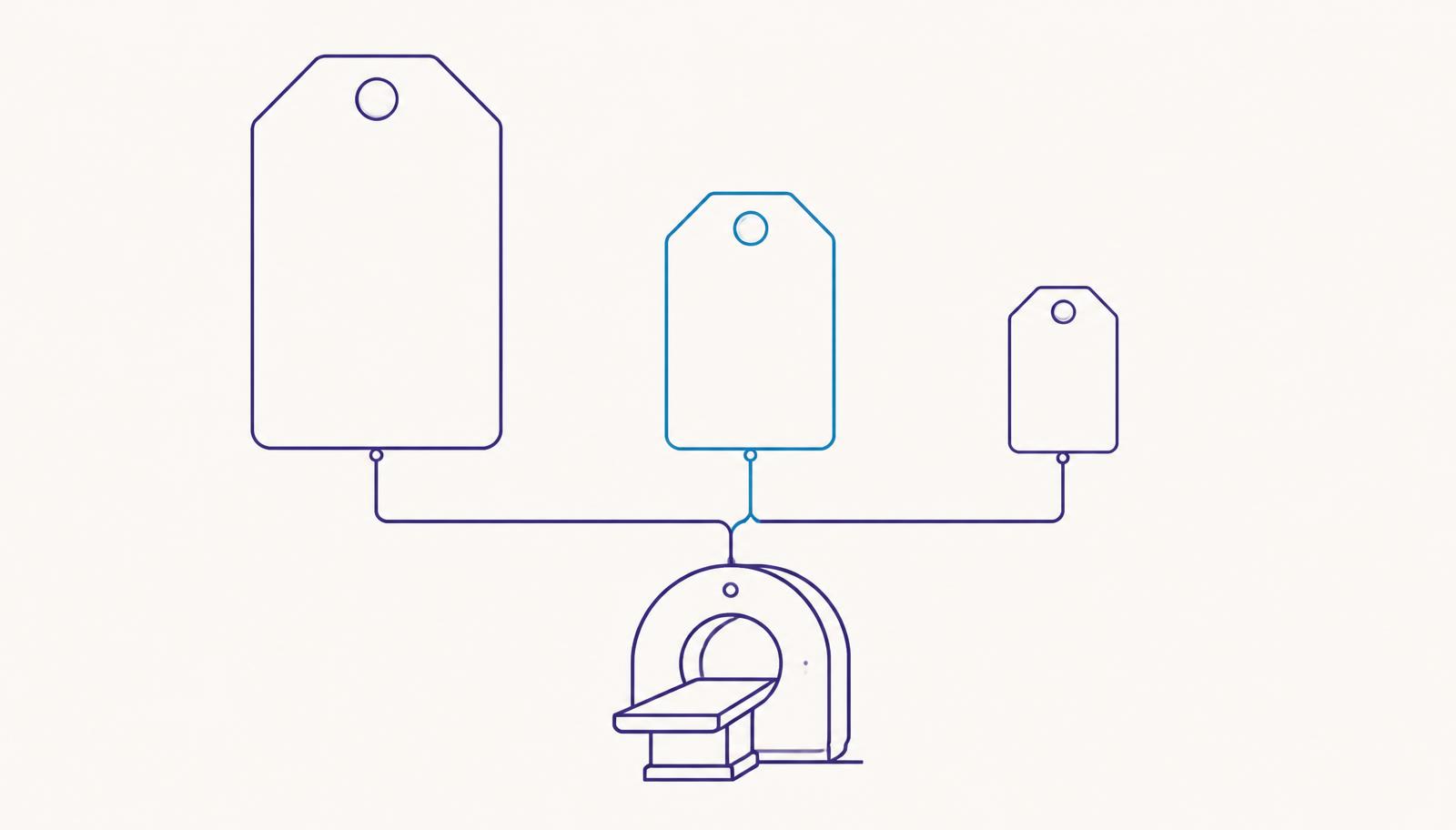
The same MRI, procedure, or test can have very different prices depending on where you go, your insurance plan, how the service is billed, and the setting where care is delivered. Here’s why healthcare prices vary so much and what consumers should know before choosing where to receive care.
By The Maggy Health Team
If you buy the same television at two stores, you probably expect the prices to be fairly close.
Healthcare does not always work that way.
An MRI, colonoscopy, blood test, or outpatient procedure can have very different prices depending on where you receive it, who provides it, which insurance plan you have, and how the service is billed.
That surprises a lot of people.
It also means one of the most important questions in healthcare is not simply: “Do I need this service?”
It is also: “Where should I get it?”
There Is No Single Price for Most Healthcare Services
When your doctor orders an MRI, there is not necessarily one universal “MRI price.”
Different healthcare organizations negotiate different rates with different insurance companies.
Even within the same insurance company, rates can vary based on the specific health plan, facility, provider, and service being performed.
So the same basic service can have multiple prices:
- One price at a hospital outpatient department
- Another at an independent imaging center
- Another negotiated by a different insurer
- Another for someone paying cash
- Another depending on the exact billing code or services included
This is one reason healthcare pricing can feel so confusing. There often isn’t one price to find. There are many.
Location Can Make a Big Difference
One of the biggest factors is site of care.
Consider an imaging service. It might be available at a major hospital, a hospital-owned outpatient facility, or an independent imaging center.
All three locations may be capable of providing appropriate care. But that does not mean they will have the same price.
Hospital-based services can sometimes carry different payment structures and facility costs than services performed in independent settings.
The same issue can appear with laboratory testing, outpatient procedures, rehabilitation, and other types of care.
That does not mean the least expensive location is always the right choice. Some patients require hospital-level resources because of their medical condition, the complexity of the procedure, or the possibility of complications.
But when multiple clinically appropriate options exist, the location of care can become an important part of the financial decision.
Your Insurance Company Negotiates Prices Separately
Health insurers build networks by contracting with hospitals, physicians, laboratories, imaging centers, surgery centers, and other healthcare organizations. Those contracts contain negotiated payment terms.
The negotiated rate is not necessarily the same everywhere in the network.
Imagine that your insurer contracts with two nearby imaging facilities. For the same service:
- Facility A: negotiated rate of $600
- Facility B: negotiated rate of $1,500
Both facilities could be in-network. Both could provide the same type of imaging. But the underlying negotiated prices could be very different.
If your deductible or coinsurance applies, that difference may affect what you pay as well.
This is why simply searching for an “in-network provider” does not always give consumers enough information to make an informed decision.
The Exact Service Matters Too
Another complication is that what sounds like one healthcare service may actually involve several different components.
Take a procedure such as a colonoscopy. Depending on what occurs during the visit, the total episode may involve:
- The procedure itself
- Facility charges
- Physician services
- Anesthesia
- Pathology
- Laboratory work
- Additional services if a polyp or other finding is identified
An imaging procedure can have similar complexity. There may be a technical component for performing the scan and a professional component for the physician who interprets it.
That means a price associated with one part of the service may not necessarily represent the entire episode.
A price can be accurate and still be incomplete.
Preventive and Diagnostic Care Can Be Treated Differently
Why you are receiving a service can matter too.
Some preventive services may be covered differently when they are performed as recommended screenings. But if the same or similar service is performed because of symptoms, an abnormal finding, or follow-up care, different benefit rules may apply.
A test that sounds identical to the patient can therefore create a different financial experience depending on the clinical context.
This is another reason healthcare pricing cannot always be reduced to: Procedure X costs $Y.
The more useful question is: What does this service cost in my situation, at this location, under my coverage?
Your Health Plan Determines What the Price Means to You
Even if we know the negotiated price, we still may not know exactly what you will pay. Your responsibility can depend on:
- Your remaining deductible
- Copays
- Coinsurance
- Your out-of-pocket maximum
- Whether the provider is in-network
- Whether prior authorization is required
- Your specific employer or health plan benefits
- How the service is ultimately billed
For example, two people could receive the exact same service at the same facility on the same day and owe different amounts because they have different health insurance benefits.
That is the difference between the price of healthcare and your price for healthcare. They are related. They are not always the same thing.
So Why Hasn’t Healthcare Shopping Been Easier?
For many years, much of the underlying pricing information was difficult or impossible for ordinary consumers to access.
Price transparency requirements are changing that. Hospitals and health insurers now publish substantial amounts of pricing information, creating new opportunities to understand how healthcare is priced.
But publishing the data is only the first step. Healthcare pricing files can contain enormous numbers of rates across plans, providers, billing codes, and service arrangements.
A consumer should not have to become a healthcare data analyst to figure out what an MRI might cost. The challenge now is turning all of that data into an understandable healthcare decision.
More Data Does Not Automatically Mean More Transparency
Imagine being shown ten different prices for the same procedure with no explanation.
- Which one applies to you?
- Does the price include the physician?
- Does it include the facility?
- Does it correspond to your insurance plan?
- Is it the correct site of care?
- Does your deductible apply?
- Is the service preventive or diagnostic?
Without context, a very precise number can still be misleading.
True transparency requires more than displaying data. It requires understanding what the data represents and when it can be trusted.
What Consumers Should Ask
When you have time to compare options for a planned service, consider asking more than just whether a facility accepts your insurance. Ask:
- Is the facility in my specific network?
- Are there other appropriate locations where I could receive this service?
- What has my health plan negotiated at each location?
- Does the quoted price represent the complete service or only part of it?
- How will my deductible, copay, or coinsurance apply?
- Is there anything about my medical situation that makes one setting more appropriate than another?
Those questions can lead to a much better decision than simply choosing the first name in a provider directory.
This Is One of the Problems Maggy Health™ Is Built to Solve
Healthcare consumers should not need to understand billing codes, machine-readable files, insurance contracts, and reimbursement methodologies before deciding where to receive care. The technology should do that work behind the scenes.
Maggy Health™ is being built to bring together healthcare navigation, provider and facility information, insurance context, and pricing intelligence into a simpler experience.
Our patent-pending healthcare pricing technology is designed around a basic principle:
Find the strongest truthful pricing information available for the decision being made, and be clear about what that information does and does not represent.
If reliable information supports a specific price, we want to surface it. If the available information supports only a range or comparison, we should say that. And if the data cannot support a responsible answer, we should not manufacture one.
Because a confident-looking number is not the same thing as an accurate answer.
The Takeaway
The price of healthcare is not determined only by what you need. It can also depend on where you go, who provides the care, which insurance plan you have, how the service is delivered, and what happens during the visit.
That complexity is frustrating. But increasing price transparency means consumers are beginning to have access to information that was previously hidden.
The next challenge is making that information understandable and actionable.
Because when clinically appropriate choices exist, knowing the difference between them can matter. And healthcare consumers deserve the information to make that choice.