Provider Directories Were Built for Search. Patients Need Decisions.
Provider directories are good at telling people what exists. They are much less effective at helping someone decide what to do next. This article explores why healthcare navigation needs to move from search toward personalized decision support.
By The Maggy Health Team
Imagine your doctor tells you:
You should see a cardiologist.
You open your health plan's provider directory, enter your ZIP code, select cardiology, and get 147 results.
Technically, the directory worked.
It found cardiologists.
But you still have a problem:
Which one should you choose?
That is the difference between search and decision support.
Healthcare has spent years getting better at helping people find information. The next challenge is helping them decide what to do with it.
A List Is Not a Decision
Provider directories are fundamentally search tools.
They answer useful questions:
- Which doctors are near me?
- Which specialists participate in my network?
- Which facilities provide this service?
But patients usually aren't looking for a list.
They're trying to solve a problem.
Someone rarely thinks:
Show me orthopedic surgeons within 15 miles.
They're thinking:
My knee has been bothering me for months. My doctor says I should see someone. Who should I see?
One question requires a database query.
The other requires context.
More Results Can Mean More Work
Give someone 60 specialists and they still may need to determine:
- Who treats their specific problem
- Who participates in their specific network
- Who is accepting new patients
- How soon they can be seen
- Where they practice
- Whether a referral is required
- Whether meaningful cost differences exist
- Which option best matches their preferences
The directory gave them information.
It also gave them a research project.
And that project arrived while they were already trying to deal with a healthcare issue.
The "Best" Option Depends on the Person
There may not be one universally best provider.
One patient looking for primary care may prioritize staying within five miles of home.
Another may be willing to drive farther for a physician experienced in managing several chronic conditions.
Both can search:
Primary Care
But their best options can be completely different.
Healthcare decisions depend on clinical needs, coverage, geography, availability, preferences, relationships, and sometimes price.
Useful navigation needs to understand what matters to the individual.
Sometimes People Don't Know What to Search For
Directories also assume consumers know how healthcare is organized.
Consider:
Who should I see about sleep apnea?
Should someone search sleep medicine? Pulmonology? Neurology? ENT? A sleep center?
The appropriate path may depend on what has already happened clinically.
Expecting the consumer to understand the correct specialty before the search even begins transfers healthcare complexity to the patient.
The experience should help determine the path before presenting the options.
In-Network Is More Complicated Than It Looks
Finding a physician associated with an insurance company is not always enough.
Insurers offer different products and networks. Physicians practice at multiple locations. Health systems contain numerous facilities and billing entities. Participation can differ across employer plans, ACA products, Medicare Advantage, and other coverage.
The useful question isn't simply:
Does this doctor take my insurance?
It is:
Does this provider participate in my specific network for the care I'm considering?
That requires more than a name in a directory.
Provider Is Only Part of the Decision
Many healthcare decisions also involve choosing where the care happens.
An MRI might be available at a hospital outpatient department or an independent imaging center.
A colonoscopy might occur at a hospital or ambulatory surgery center.
Those options can differ in convenience, availability, continuity, and price.
Suppose three appropriate imaging facilities are nearby and all participate in your network.
Are they financially equivalent?
Not necessarily.
Different providers and facilities can have very different negotiated rates with the same health plan. If your deductible or coinsurance applies, that difference may affect what you pay.
A useful decision can therefore involve:
Clinical appropriateness + network + location + availability + price + personal preference.
Provider directories were never designed to solve all of that.
Search Starts With a Category. People Start With a Question.
Traditional healthcare navigation begins with:
- Choose a specialty.
- Choose a service.
- Enter a location.
People begin somewhere else:
- My doctor says I need an MRI.
- I need a new primary care doctor.
- I'm overdue for a mammogram.
- Who treats sleep apnea?
- Where can I get this done without spending a fortune?
Those aren't search queries.
They’re conversations.
And the right follow-up questions can progressively turn an unclear need into a manageable decision.
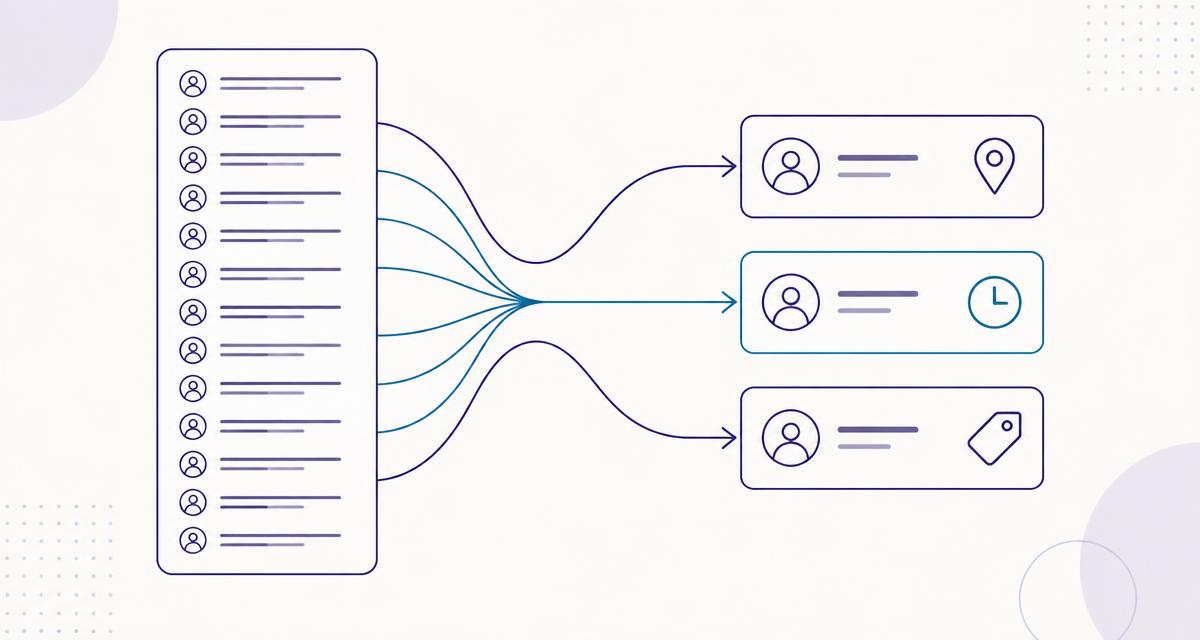
From 147 Results to Three Useful Choices
Imagine instead of receiving 147 cardiologists, the experience asks:
Why did your doctor recommend cardiology?
Then:
Do you have a preferred health system?
Then:
Would you rather prioritize the earliest appointment or the closest location?
Suddenly 147 possibilities might become three relevant choices.
The goal does not have to be:
This is the best doctor for you.
Healthcare often cannot support that level of certainty.
A better answer may be:
Here are three appropriate options, and here are the differences that may matter to you.
One may be closer.
One may have earlier availability.
One may participate in the health system where the patient already receives care.
One may be less expensive under the member's coverage.
That is decision support.
Why This Matters to Healthcare Organizations
For health systems, better navigation can help patients move from a recommendation to appropriate care without getting lost between referral and scheduling.
For health plans, it can move the member experience beyond simply identifying who participates in the network toward helping people find appropriate, convenient, and potentially higher-value options.
For ACOs and other risk-bearing organizations, it can help turn identified care needs into completed care.
The underlying provider directory remains important.
But it becomes infrastructure supporting the decision rather than the experience the consumer has to navigate alone.
AI Changes the Interface, Not the Need for Good Data
Conversational AI gives healthcare an opportunity to rethink this experience.
Instead of forcing people through forms and filters, they can begin with their actual question.
The technology can translate that conversation into structured searches and decision logic behind the scenes.
But a conversational interface alone is not enough.
Clinical pathways still need governance.
Network participation needs reliable evidence.
Pricing requires context.
Provider and facility information needs structure.
AI should make healthcare complexity easier to navigate.
It should not manufacture certainty when the underlying information cannot support it.
This Is How We Think About Maggy
At Maggy Health™, we think provider directories should increasingly become something the technology uses behind the conversation, rather than something the consumer has to navigate directly.
Someone should be able to say:
- I need a dermatologist.
- My doctor says I need a sleep study.
- I'm looking for a new primary care doctor.
Then Maggy can help work through the questions that actually matter:
- What kind of care is needed?
- What coverage does the person have?
- Which options are appropriate?
- Which participate in the relevant network?
- What preferences matter?
- What pricing information can responsibly be determined?
- What should happen next?
The consumer sees a conversation.
Behind it may be provider data, facility data, benefits, clinical logic, pricing evidence, geography, and other healthcare intelligence.
That is the point.
Healthcare complexity should increasingly be handled by the technology, not transferred to the patient.
The Takeaway
Provider directories solved an important problem:
Helping people find healthcare providers.
But patients increasingly need help solving a bigger one:
Choosing what to do next.
Healthcare doesn't need to eliminate search.
It needs to build a decision layer on top of it.
Because when someone needs healthcare, the goal shouldn't be to give them more results.
It should be to make the next decision easier.